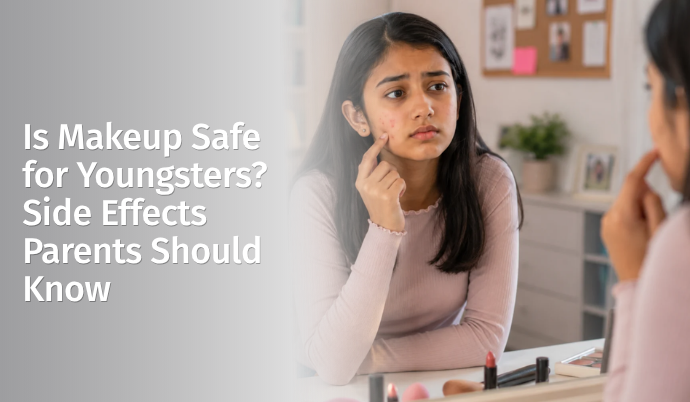
Do you constantly see those "Get Ready With Me" (GRWM) for school/ college videos flooding your social media feed? In an age dominated by short-form video trends, beauty influencers, and digital filters, children, pre-teens, and teenagers are experimenting with cosmetics earlier than ever before. What used to be an occasional playtime dress-up routine has evolved into daily multi-step skincare and makeup rituals for many young individuals.
As colorful packaging, glitter formulations, and social media trends make beauty products irresistibly appealing, many concerned parents find themselves asking a crucial medical question: "Is putting makeup on developing skin actually safe, and what are the long-term health consequences of using cosmetics at a young age?"
While using cosmetics can be a fun form of creative expression, young skin is anatomically and physiologically very different from mature adult skin. It is thinner, more absorbent, highly sensitive, and undergoing rapid hormonal shifts. Applying complex chemical formulations, synthetic fragrances, and heavy pigments to delicate pediatric or adolescent skin can trigger a wide range of dermatological and systemic issues.
In this clinical guide, pediatricians, dermatologists, and medical specialists break down the physiological vulnerabilities of young skin, highlight the key side effects of cosmetics, and outline practical safety guidelines every parent should know.
Key Takeaways: Quick Summary
Why Is Young Skin More Vulnerable to Cosmetics?
To understand why makeup poses unique risks to children and teenagers, it helps to examine how young skin differs from adult skin:
5 Major Side Effects of Cosmetics at a Young Age
When children and teenagers use adult makeup products or inexpensive, low-quality play cosmetics, their skin can suffer various adverse reactions:
1. Contact Dermatitis and Allergic Reactions
One of the most immediate side effects of cosmetics in youngsters is contact dermatitis, an inflammatory skin reaction triggered by irritants or allergens.
2. Acne Mechanica, Clogged Pores, and Blackheads
Heavy liquid foundations, concealers, contour sticks, and blushes often contain heavy oils, silicones, and waxes designed to create long-lasting coverage.
For teenagers already prone to hormonal acne, these occlusive products physically block pores (comedones), trapping dirt, dead skin cells, and bacteria. This leads to widespread acne mechanica, painful inflammatory papules, pustules, and deep-seated blackheads that can leave permanent skin scarring if picked at or handled incorrectly.
3. Skin Barrier Damage and Accelerated Sensitivity
The natural skin barrier (acid mantle) maintains moisture levels and defends against environmental pathogens. Daily application of heavy makeup—combined with aggressive scrubbing or adult cleansing products to remove it—strips the skin of its natural lipid layer. Over time, this results in chronic dryness, skin barrier dysfunction, persistent redness, and heightened sensitivity, leaving young skin vulnerable to secondary bacterial and fungal skin infections.
4. Exposure to Endocrine Disruptors and Heavy Metals
Many cheap, unverified, or imported cosmetic kits aimed at children skip rigorous safety testing. Independent dermatological safety testing has repeatedly found concerning ingredients in low-grade cosmetics:
5. Periocular Irritation and Eye Infections
Applying eyeliners, mascaras, and glitter eyeshadows near delicate young eyes poses significant ophthalmological risks. Glitter particles can easily scratch the cornea, while shared or expired eye makeup can introduce harmful bacteria, causing painful conjunctivitis (pink eye), styes (hordeolum), and blepharitis (eyelid inflammation).
Practical Safety Guidelines for Parents: Protecting Your Child's Skin
If your pre-teen or teenager is determined to experiment with makeup, you do not necessarily need to ban it entirely. Instead, guide them toward safe, age-appropriate habits:
1. Inspect Labels for Safe Formulations
Always read the ingredient list before purchasing cosmetics for your child. Look for products clearly labeled:
2. Emphasize a "Less is More" Approach
Encourage light, age-appropriate alternatives rather than heavy adult foundations and full-coverage cosmetics:
3. Establish a Non-Negotiable Nightly Cleansing Routine
Sleeping in makeup is a primary cause of severe acne and skin irritation. Teach your teenager to gently remove makeup every single night:
4. Enforce Strict Makeup Hygiene Rules
Comprehensive Pediatric, Adolescent, and Dermatological Care at Sir Ganga Ram Hospital (SGRH)
When using cosmetics at a young age triggers persistent skin rashes, severe acne outbreaks, or painful allergic reactions, professional medical evaluation is essential to prevent permanent skin scarring and long-term barrier damage. The Departments of Dermatology and Pediatrics at Sir Ganga Ram Hospital (SGRH) provide comprehensive diagnostic assessment, specialized adolescent skin management, and evidence-based clinical care in India.
Why Families Trust SGRH for Pediatric and Dermatological Care:
Conclusion
While experimenting with beauty products is a common rite of passage, understanding the dermatological side effects of cosmetics empowers parents to protect their children's long-term skin health. Introducing cosmetics at a young age without proper guidance can compromise delicate skin barriers, trigger severe acne, and expose young bodies to unwanted chemical irritants.
By encouraging age-appropriate, minimal makeup choices, prioritizing daily skin hygiene, and choosing non-comedogenic, hypoallergenic formulations, you can help your child enjoy creative expression while maintaining healthy, radiant skin.
If your child or teenager is experiencing severe acne, persistent skin redness, itching, or allergic reactions from cosmetics, connect with the dermatology and pediatric specialists at Sir Ganga Ram Hospital to schedule a comprehensive evaluation today.
Book an appointment with SGRH today.
Frequently Asked Questions (FAQs)
Q1: What is the safest age for a child to start wearing makeup?
A: Dermatologists generally recommend waiting until mid-to-late adolescence (ages 14 to 16) before introducing daily adult cosmetics. For younger children or pre-teens, play makeup should be strictly restricted to non-toxic, water-based, hypoallergenic products used sparingly for special occasions.
Q2: Can using makeup early cause permanent skin damage?
A: Yes, severe allergic contact dermatitis or picking at severe cosmetic-induced acne can leave permanent skin scarring or hyperpigmentation. Additionally, repeatedly stripping the natural skin barrier with harsh products can lead to chronic skin sensitivity and barrier dysfunction later in life.
Q3: Are "play makeup" kits designed for kids safer than adult makeup?
A: Not necessarily. Inexpensive toy makeup kits frequently skip strict dermatological testing and may contain cheap fillers, synthetic dyes, fragrances, and trace heavy metals. Always inspect labels, choose reputable brands, and perform a patch test on your child's inner arm before use.
Q4: What should I do if my child develops a sudden rash from a cosmetic product?
A: Immediately wash off the product using cool water and a gentle, soap-free cleanser. Stop using all cosmetic products on the area, apply a simple cold compress to soothe burning, and refrain from applying harsh anti-acne or adult cream products. If swelling, hives, or severe redness persist, consult a pediatrician or dermatologist at SGRH.
Q5: How can teenagers prevent acne if they want to wear makeup daily?
A: Teenagers should choose oil-free, non-comedogenic, and mineral-based makeup formulations (like zinc oxide-based tinted sunscreens). They must thoroughly remove all makeup every night using a gentle cleanser, avoid sharing makeup tools, wash makeup brushes weekly, and apply a lightweight moisturizer daily.
Q6: What is a "patch test," and how should parents perform one?
A: A patch test checks if a product causes an allergic or irritant reaction before full application. Apply a small, dime-sized amount of the cosmetic product to your child's inner forearm or side of the neck. Leave it untouched for 24 to 48 hours and monitor the area for redness, itching, swelling, or tiny bumps. If any reaction occurs, do not use the product.