By Senior Dieticians Ms. Vandana Verma in Clinical Nutrition and Dietetics
Festivals such as Diwali, and the family get-togethers that come with them, are synonymous with joy, togetherness and tables full of mithai, gulab jamun and kaju katli.
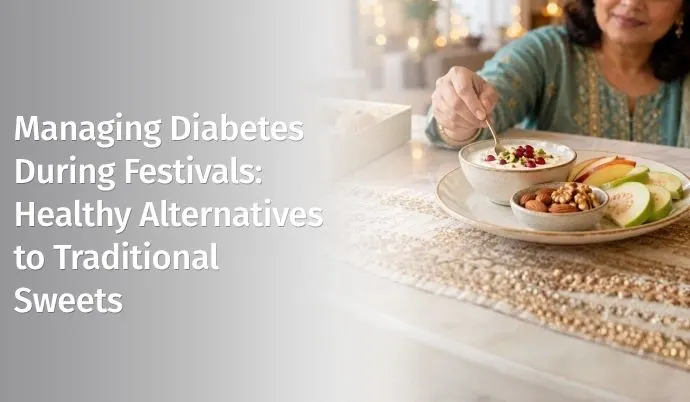
For people with type 1 or type 2 diabetes, however, rich festive food, irregular meal times and less physical activity can push blood sugar up. You do not have to give up the celebrations. With diabetes-friendly sweets, smart ingredient swaps and low-GI choices, you can enjoy the season safely.
Key Takeaways
- Know the problem: Traditional sweets are high in refined sugar, refined flour (maida) and fat, and raise blood glucose quickly.
- Swap ingredients: Replacing sugar and maida with whole-grain, millet, besan, oat or nut flours lowers the glycemic load. Using healthy oils instead of palm oil and hydrogenated fats is better for heart health.
- Add fibre, protein and healthy fats: They slow carbohydrate absorption and blunt post-meal spikes.
- Watch portion and timing: Have sweets occasionally, in small portions, after a fibre- and protein-rich meal.
Why Managing Blood Sugar During Festivals Is Important
Festive eating combines high-sugar, high-fat foods with irregular meals, late dinners and less activity, which makes blood sugar harder to control.
The problem with traditional sweets
Traditional sweets are mainly made from refined sugar, khoya (mawa), maida and deep-fried items. They are rapidly digested and can cause:
- Sharp rises in blood glucose: sudden post-meal spikes that are difficult to bring down.
- Post-meal drowsiness: tiredness and sleepiness after eating.
- Weight gain and insulin resistance: extra calories from sugar add to body weight, which worsens insulin resistance in type 2 diabetes.
Key Ingredients for Diabetes-Friendly Festival Sweets
Start by stocking nutritious, lower-GI ingredients that still give good taste and texture.
1. Sweeteners: use less, and use sparingly
- Stevia and monk fruit: plant-derived sweeteners that do not raise blood glucose.
- Erythritol (a sugar alcohol), aspartame, sucralose: use only occasionally and within approved limits. The ICMR-NIN Dietary Guidelines for Indians (2024) caution against long-term use of non-calorie sugar substitutes, so the best approach is to reduce overall sweetness gradually.
- Dates and figs: add fibre and minerals but also contain natural sugars. Use only small amounts and count them in your carbohydrate allowance.
2. Fibre-rich, lower-GI flours
- Almond and coconut flour: low in carbohydrate and rich in healthy fats and protein, which helps moderate blood sugar.
- Millet (ragi, jowar, bajra) and besan (chickpea flour): provide fibre and micronutrients and are much better choices than refined flour.
- Oat flour: rich in beta-glucan fibre, which helps blunt the rise in blood sugar after meals.
Practical Tips for Managing Diabetes on Festival Days
- Avoid sweets on an empty stomach: a small portion after a fibre- and protein-rich meal slows glucose absorption.
- Control portions: use a small bowl and take a few bites of your favourite sweet instead of a second helping.
- Stay active after meals: a 15–20 minute walk after lunch or dinner helps muscles use glucose and flattens the blood sugar curve.
- Monitor more often: check blood glucose more frequently than usual to see how specific foods affect you.
- Do not change your treatment: never skip or alter diabetes medicines or insulin without consulting your doctor.
- Plan for fasting days: if you fast (for example during Navratri) and take insulin or certain tablets, ask your doctor to adjust your plan, as fasting raises the risk of low blood sugar.
How Sir Ganga Ram Hospital (SGRH) Supports Your Diabetes Management
Personalised clinical advice and expert monitoring help you manage diabetes through festivals and seasonal changes. At SGRH you can access:
- Endocrinology and Diabetes: care for type 1, type 2 and gestational diabetes, including insulin therapy, continuous glucose monitoring (CGM) and advanced metabolic management.
- Clinical Nutrition and Dietetics: medical nutrition therapy (MNT) and personalised diet planning to control blood sugar while enjoying seasonal foods.
- Preventive Health Check-up Centre: comprehensive screening packages including HbA1c, lipid profile and renal function tests.
Conclusion
Living with diabetes does not mean sitting out India's most vibrant festivals. By choosing diabetes-friendly festival sweets, using smarter ingredients and favouring low-GI choices in sensible portions, you can enjoy seasonal traditions while keeping your blood sugar well controlled.
For expert guidance on managing your blood sugar, updating your diet plan or scheduling a health check-up, the endocrinologists and dietitians at Sir Ganga Ram Hospital are here to help.
To know more visit www.sgrh.com.
FAQs
Q1: Can people with diabetes safely eat festival sweets?
Yes, occasionally and in small portions. Choose sweets made with less sugar and fibre-rich ingredients such as nuts, oats or millets, have them after a balanced meal, and count them within your meal plan.
Q2: What are the best diabetes-friendly sweets for Diwali?
Nut-and-date ladoos, oats-and-besan ladoos with minimal sweetener, baked paneer desserts and lauki halwa made with toned milk and stevia, all in small portions.
Q3: Which sweeteners are safe for sugar-free festival sweets?
Stevia and monk fruit do not raise blood glucose. Erythritol, aspartame and sucralose are approved for use but should be occasional, as ICMR-NIN cautions against long-term use of sugar substitutes. Gradually reducing overall sweetness is the better goal.
Q4: How do low-GI Indian desserts help people with diabetes?
Ingredients such as nuts, seeds and millet flours provide fibre, protein and healthy fats. These slow carbohydrate digestion and help reduce post-meal blood sugar spikes.
Q5: Is it better to eat sweets before or after a meal?
After. A small portion at the end of a meal rich in fibre and protein is better than having it on an empty stomach, because slower digestion reduces the rise in blood glucose.
Q6: Can jaggery or honey replace sugar in diabetic sweets?
No. Jaggery and honey have some minerals, but they are still free sugars that raise blood glucose, so they are not suitable substitutes. ICMR-NIN advises keeping added sugar intake low.
Q7: When should I seek urgent medical care during festivals?
Seek urgent care if high blood sugar comes with extreme thirst, frequent urination, nausea or vomiting, abdominal pain, fast or deep breathing, fruity-smelling breath or confusion. For low blood sugar (below 70 mg/dL) with shakiness, sweating, dizziness or a fast heartbeat, take about 15 g of fast-acting carbohydrate (for example 3–4 glucose tablets or ½ cup of fruit juice) and recheck after 15 minutes; repeat if still low. Get urgent help if symptoms persist, you are confused, or you cannot swallow or lose consciousness.
This article is for general information and does not replace individual medical advice.