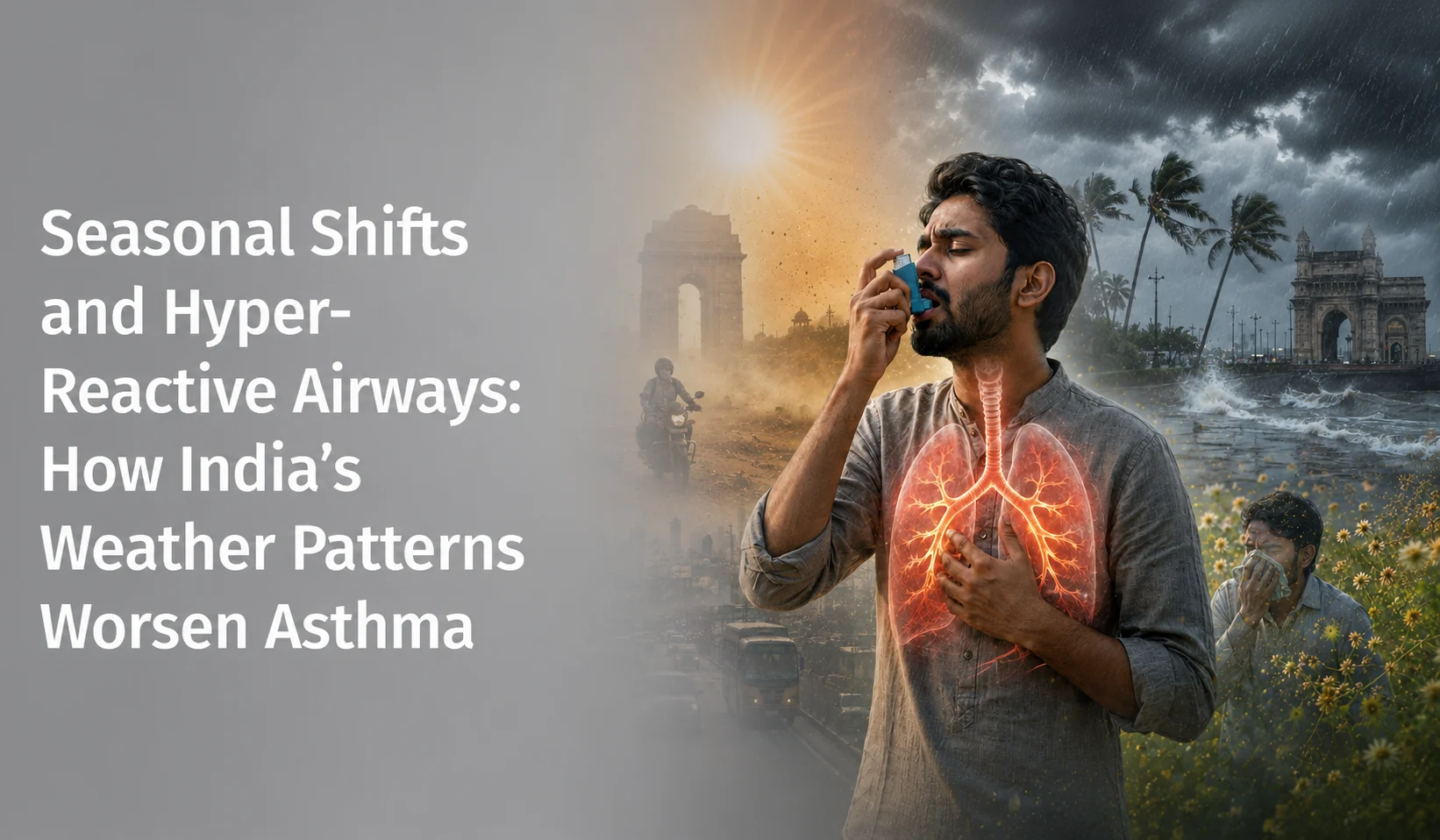
For anyone living with chronic respiratory conditions in India’s rapidly growing metropolitan areas, checking the daily weather forecast is not just about choosing an outfit, it is a vital step in health management. Many individuals notice a direct, frustrating correlation between a shifting atmosphere and their ability to breathe comfortably.
A common, distressing question shared by patients as seasons change is: "Why does my asthma flare up dramatically every time the weather changes from hot to humid?" The scale of this challenge is particularly acute within the subcontinent. According to the Global Burden of Disease Study, over 34 million people in India suffer from asthma, amounting to approximately 13% prevalence worldwide. When a sudden drop in pressure or a wave of moisture triggers an immediate tightness in your chest, you aren't imagining things. Your lungs are acting as a highly sensitive biological barometer. In highly populated urban spaces like Delhi-NCR, Mumbai, Kolkata, and Bangalore, modern, erratic shifts in our climate are magnifying standard environmental elements. The collision of toxic industrial smog with volatile seasonal shifts turns routine weather changes into severe, emergency-room respiratory challenges.
Key Takeaways
Why does a sudden transition from hot to humid weather provoke asthma attacks?
To understand why a transition from hot to humid weather triggers a sudden asthma flare in metropolitan cities, we have to look at how atmospheric changes physically alter both the urban air we breathe and the architecture of our airways:
1. Physical Airway Irritation from Heavy Air
Humid air is physically heavier and holds more water vapor than dry air. When your lungs inhale this dense, warm moisture, it increases airway resistance. For a person with hyper-reactive airways, this sudden thickness can directly stimulate the sensitive sensory nerve fibers in the respiratory tract, triggering an involuntary reflex that causes the smooth muscles surrounding your bronchial tubes to contract and tighten (bronchospasm).
2. The Explosion of Allergen Inhalation
High humidity functions as a powerful incubator for two of the most aggressive seasonal asthma triggers: mold spores and dust mites. Furthermore, when a hot day shifts into a humid thunderstorm, a common event during the pre-monsoon transitions in coastal metros like Mumbai or inland capitals like Delhi, the sudden moisture causes floating pollen grains to rapidly absorb water and rupture into thousands of microscopic fragments. Instead of being filtered out by your nose, these tiny allergen fragments travel deep into your lungs, causing an immediate inflammatory response.
3. Trapped Ground-Level Pollution in Indian Metros
Hot, humid weather often creates stagnant air masses. In heavily crowded metropolitan areas, this lack of wind traps industrial emissions, vehicle exhaust, construction dust, and ground-level ozone close to the ground. This thick blanket of smog acts as a harsh chemical irritant on the delicate lining of your lungs, making a sudden weather change cough far more severe.
What daily habits help protect sensitive lungs from city pollution and weather changes?
To protect your lungs from unpredictable environmental shifts, you must move away from a reactive "rescue-only" approach and establish a comprehensive respiratory allergy management routine:
How does Sir Ganga Ram Hospital diagnose and treat severe urban respiratory issues?
When fluctuating weather shifts leave you dependent on emergency rescue inhalers, experiencing chronic nighttime wheezing, or dealing with an unyielding chest tightness, it is a clear sign that your respiratory baseline needs an expert adjustment. The Department of Chest Medicine (Pulmonology) at Sir Ganga Ram Hospital (SGRH) stands as a trusted center for complex allergy, asthma, and advanced sleep-respiratory care in India.
Why Families Trust SGRH for Respiratory Health:
Conclusion
Your lungs are highly adaptive organs, but running them on the compounding strain of volatile weather shifts without a protective barrier is a recipe for chronic exhaustion. Managing your breathing does not require you to live in fear of the seasons. By shifting from a reactive mindset to an informed strategy of environmental tracking, keeping up with controller therapies, and partnering with a legacy medical institution, you can breathe easily through any atmospheric shift.
Connect with the specialized clinical consultants at the Department of Chest Medicine or the Pulmonology Care Teams at Sir Ganga Ram Hospital to map out your comprehensive lung health and respiratory evaluation today.
Book an appointment with SGRH today.
FAQs
Q1: How can I tell the difference between a normal seasonal cold and a weather-induced asthma flare?
A: A standard seasonal viral cold typically builds up slowly over a few days, presenting with systemic symptoms such as a sore throat, runny nose, low-grade fever, and mild body aches. A weather-induced asthma flare, however, can hit within minutes of a sudden temperature or humidity drop.
Q2: What are the primary mandatory instructions for a diagnostic spirometry (lung function) test?
A: To ensure absolute diagnostic accuracy during a spirometry evaluation, patients should avoid eating a heavy meal for at least two hours prior to the test to allow for full chest expansion. Wear loose, comfortable clothing that does not restrict your breathing.
Q3: Can a sudden thunderstorm actually cause an emergency asthma attack in someone who usually only has mild symptoms?
A: Yes, absolutely. This is a well-documented medical phenomenon known as "Thunderstorm Asthma." During the early stages of a storm, strong downdrafts pull whole grass and tree pollen grains up into the clouds. The high moisture and electrical activity cause these grains to rupture into highly concentrated, microscopic allergen particles.
Q4: Why does my asthma feel significantly worse in heavily populated metropolitan cities compared to rural regions during seasonal transitions?
A: Urban centers suffer from a dangerous effect where high concentrations of microscopic vehicular particulate matter bind physically to natural outdoor allergens. This chemical bond makes the pollen particles stickier, harder to clear from the lungs, and far more irritating to the respiratory lining.
Q5: What are the primary logistical requirements before scheduling a pediatric allergy skin prick test at SGRH?
A: To guarantee absolute accuracy during a comprehensive allergy mapping profile, children must completely stop taking all oral antihistamines, cold syrups, or allergy medications for at least 5 to 7 days prior to the skin test, as these substances mask natural hyper-reactive responses.
Q6: Can long-term exposure to urban smog and untreated weather-induced bronchospasms permanently alter my lung architecture?
A: Yes, absolutely. When recurrent, weather-triggered airway narrowing and inflammation are left unmanaged by controller therapies, the lungs undergo a process called "airway remodeling." Over years, the smooth muscles around the bronchial tubes become permanently thickened, and delicate lung tissues develop micro-scarring.