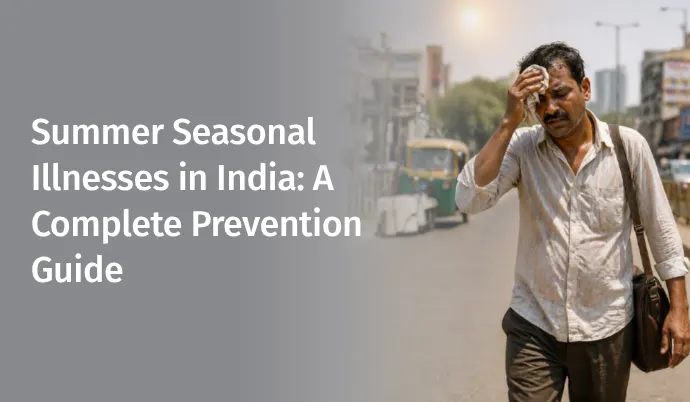
The Indian summer is a season of extremes. While we look forward to summer vacations and the arrival of mangoes, the soaring temperatures, often crossing 45°C in many parts of the country, bring a host of severe health challenges.
The combination of scorching heat and rising humidity creates the perfect breeding ground for bacteria, viruses, and mosquitoes. Consequently, hospitals see a massive surge in patients suffering from entirely preventable seasonal diseases. From the deadly hot winds (the Loo) of the northern plains causing heatstroke, to contaminated street food leading to severe typhoid, the summer months demand a high level of health vigilance.
Understanding the symptoms of these summer seasonal illnesses in India and adopting a strict prevention guide is your best defense. Here is everything you need to know to keep your family healthy, hydrated, and safe this season.
Quick Summary
Why do we fall ill during the summer?
Summer is the season when we get sick as unbearable heat causes profuse sweating and dehydration causing our body defence system to weaken, while higher temperatures facilitate proliferation of foodborne microorganisms and disease transmitting mosquitoes.
What are the most common summer diseases in India?
The most common summer diseases fall into four main categories: heat-induced illnesses, water/foodborne infections, vector-borne (mosquito) diseases, and viral/skin infections.
Here is a complete list of the seasonal illnesses that peak during the Indian summer:
Heat-Induced Illnesses in summer
Water and Foodborne Infections in summer
Vector-Borne (Mosquito) Diseases in summer
Viral and Skin Infections in summer
How can you prevent summer diseases?
You can prevent most summer diseases by drinking at least 3-4 liters of water daily, avoiding outside street food and raw cut fruits, staying indoors during peak sun hours, and eliminating stagnant water.
Follow these steps to protect your health:
How do summer illnesses affect children and the elderly?
Children and the elderly are exceptionally vulnerable to summer temperature extremes, putting them at the highest risk for silent heatstroke and rapid dehydration.
How does summer temperature affect the elderly (Over 65)?
How does summer temperature affect children and infants?
When should you visit a doctor?
You should seek immediate medical attention if you experience a fever lasting more than 48 hours, severe vomiting that prevents fluid intake, or any neurological signs of a heatstroke like confusion or fainting.
While mild dehydration or a heat rash can be managed at home with Oral Rehydration Solutions (ORS) and rest, do not ignore severe warning signs.
Expert Care at Sir Ganga Ram Hospital (SGRH):
The Department of Medicine at Sir Ganga Ram Hospital (SGRH) is fully equipped to handle complex summer emergencies. From rapid diagnostics for undiagnosed seasonal fevers to advanced intravenous rehydration for severe food poisoning, our specialists provide the targeted therapies you need for a safe and speedy recovery.
Book an appointment with SGRH today.
Conclusion
The extreme Indian summer does not have to result in sickness. By understanding how the heat and humidity affect your body, and by proactively managing your hydration, diet, and sun exposure, you can stay healthy all season long. Stay cool, maintain strict hygiene, and remember that prompt medical care is your best safety net when home remedies are not enough.
Frequently Asked Questions (FAQs)
1. Is it safe to drink ice-cold water immediately after coming in from the sun?
No, drinking ice-cold water immediately after extreme heat exposure can shock your system and cause severe throat and stomach cramps. It is much safer to sit for a few minutes to cool down naturally and drink cool or room-temperature water gradually.
2. Are roadside sugarcane juices and jaljeera safe to drink in the summer?
No, roadside juices carry a very high risk of causing Typhoid, Cholera, or Hepatitis A (Jaundice). The ice and water used by street vendors are frequently contaminated, and the crushing machines are rarely sanitized. Always opt for sealed bottled beverages or homemade drinks like fresh lemon water.
3. How do I know if my child or baby is severely dehydrated?
Signs of severe dehydration in children include a dry, sticky mouth, crying without tears, and no wet diapers for more than three hours. Children and infants are highly susceptible to the heat, so watch closely for unusual irritability, sunken eyes, or extreme lethargy, and seek medical help if these occur.