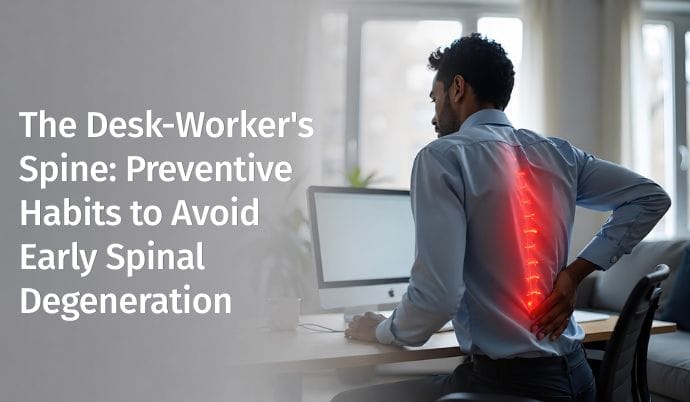
Our bones and joints form the structural foundation of our bodies, allowing us to walk, run, lift, and live freely. However, when joint pain or bone injuries strike, even the simplest daily activities—like climbing a flight of stairs or picking up a grocery bag—can become incredibly difficult.
This is a rapidly growing reality across the country. According to a recent report by the Times of India, India faces a significant osteoporosis burden, with over 61 million cases—80% of them women. The most striking finding may be the early onset of fractures, which occur a full 10–12 years earlier in Indian osteoporosis patients compared to those in the West.
Whether the pain is the result of this early-onset bone weakness, sudden trauma, an old sports injury, or the natural wear and tear of aging, ignoring it usually makes the underlying condition worse. Modern medicine has evolved rapidly, meaning that chronic pain is no longer something you simply have to "live with." By seeking timely care at the Best Orthopedic Hospital in Delhi, you can access groundbreaking treatments designed to completely restore your mobility and get you back to the life you love.
Key Takeaways: Quick Summary
What are the most common orthopedic conditions?
Orthopedic specialists treat a vast range of musculoskeletal issues, but the majority of joint and bone problems fall into three main categories:
1. Arthritis
Arthritis is not a single disease, but a broad term for joint inflammation. The most common type is Osteoarthritis, which occurs when the protective cartilage that cushions the ends of your bones gradually wears down over time. This leads to painful bone-on-bone friction, most commonly in the knees, hips, and hands. Rheumatoid arthritis, an autoimmune condition where the body attacks its own joint linings, is another frequent cause of severe swelling and stiffness.
2. Fractures
Bones are incredibly strong, but they can break or crack under sudden, immense force. Fractures range from hairline cracks (often caused by repetitive stress or osteoporosis) to complex, shattered compound fractures resulting from severe accidents. Proper alignment and stabilization are required immediately to ensure the bone heals correctly without causing future deformities.
3. Sports Injuries
You don't have to be a professional athlete to suffer a sports injury. Weekend joggers, gym-goers, and amateur cricketers frequently experience acute injuries. The most common include torn ligaments (like an ACL tear in the knee), damaged tendons, meniscus tears, and severe ankle sprains. These injuries often involve a sudden "pop" followed by intense pain and instability.
How does Sir Ganga Ram Hospital excel with advanced Orthopaedic treatments?
When conservative treatments like medication, rest, and injections are no longer effective, modern orthopedic surgery offers highly advanced, definitive solutions. As a leading Best Orthopedic Hospital, Sir Ganga Ram Hospital (SGRH) integrates cutting-edge technology into every procedure to ensure faster healing and superior outcomes.
Arthroscopy: The "Keyhole" Approach
In the past, fixing a damaged joint required a large, open incision. Today, the Department of Orthopaedics at SGRH routinely utilizes advanced arthroscopy.
The Next Generation of Robotic Joint Replacement
For patients with severe, end-stage arthritis where the joint is completely destroyed, joint replacement (Arthroplasty) is often the best path forward. SGRH brings you a smarter, more accurate solution built for long-term mobility.
Why is recovery and physiotherapy important?
A successful surgery is only the halfway point of your treatment journey. The true restoration of your mobility happens during recovery. After a joint issue is medically fixed, the surrounding muscles are often weak and stiff from lack of use.
At SGRH, we believe in end-to-end care. Our dedicated Joint Replacement Surgery Department works seamlessly with our Joint Replacement Surgeons. A dedicated physiotherapist will guide you through specific, targeted exercises to:
We do not just perform the surgery and send you home; we provide integrated, in-house rehabilitation programs to ensure your recovery is complete, safe, and sustainable.
Take the Next Step Towards Pain-Free Movement
Do not let joint and bone pain dictate what you can and cannot do. With the right medical team and advanced robotic technology, a life of comfortable, active mobility is entirely within your reach.
Book your consultation with the expert orthopedic surgeons at Sir Ganga Ram Hospital today and step into a new era of orthopaedic excellence.
Frequently Asked Questions (FAQs)
Q1: How do I know if I need a joint replacement or just medication?
A: Joint replacement is typically recommended only after conservative treatments—like physical therapy, anti-inflammatory medications, and steroid injections—no longer provide relief. If your knee or hip pain limits your movement, keeps you awake at night, or prevents you from doing basic daily tasks, it is time to consult a surgeon.
Q2: Is robotic joint replacement safe? Will a robot be doing the surgery?
A: It is incredibly safe, and no, the robot does not perform the surgery. The robotic system is a highly advanced assistant completely controlled by your human surgeon. It simply prevents the surgeon from moving outside the pre-planned, exact measurements, ensuring near 100% accuracy for your implant.
Q3: How long does it take to recover from arthroscopic knee surgery?
A: Because it is a minimally invasive "keyhole" procedure, recovery is much faster than traditional open surgery. Many patients go home the same day and, with proper physiotherapy, can return to desk work in a few days and resume light sports within a few weeks.
Q4: Can torn ligaments from a sports injury heal on their own?
A: Minor sprains and strains can heal with rest and physical therapy. However, a complete tear of a major ligament (like an ACL) lacks the blood supply needed to heal itself. Without arthroscopic reconstruction, the joint will remain permanently unstable.
Q5: Am I too old or too young to get a joint replacement?
A: There is no strict age limit for a joint replacement. The decision is based on the severity of your joint damage and your overall health. While most commonly performed on older adults, younger patients suffering from severe trauma or rheumatoid arthritis frequently benefit from these life-changing procedures as well.