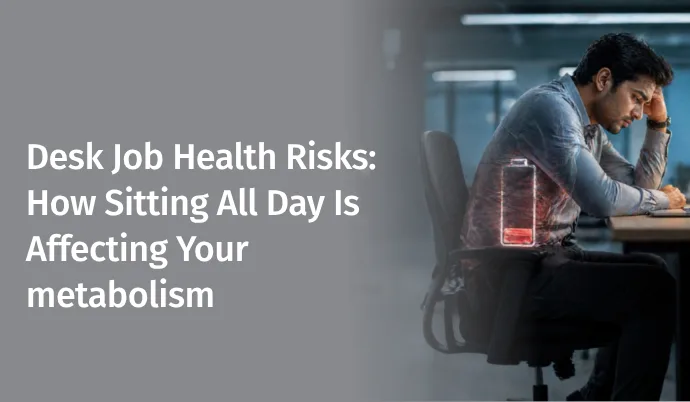
In the professional world, our most common working position is not standing, walking, or lifting, it is sitting. Whether you are typing away at a computer, sitting through back-to-back virtual meetings, or commuting, the average adult now spends upwards of 8 to 10 hours a day glued to a chair.
While a desk job might seem physically harmless compared to manual labor, the human body was fundamentally designed for continuous movement. When we lock ourselves into a seated position for the majority of our waking hours, we trigger a cascade of negative biological responses. The most profound, yet invisible, of these changes happens to your metabolism.
Understanding the severe sedentary lifestyle effects is the first step in taking your health back from your office chair. Here is exactly how an inactive workday sabotages your metabolic health and what you can do to reverse the damage.
Key Takeaways: Quick Summary
How does your matabolism slow down when you sit?
Your metabolism is the complex chemical engine that converts the food you eat into the energy your body needs to function. When you engage your muscles, particularly the large muscle groups in your legs and core, your metabolism runs efficiently.
However, sitting all day health risks begin the exact moment your bottom hits the chair. The electrical activity in your leg muscles completely shuts off. This triggers a chain reaction:
1. Plunging Fat-Burning Enzymes
Within just a few hours of continuous sitting, the production of lipoprotein lipase—an essential enzyme found in your blood vessels that breaks down circulating fat—drops by up to 90%. Instead of being burned for energy, these fats are re-packaged and stored in your body, leading to gradual, stubborn weight gain, particularly around the midsection.
2. Spiking Blood Sugar and Insulin Resistance
When you are moving, your muscles readily absorb glucose (sugar) from your bloodstream to use as fuel. When you sit all day, your muscles don't need that fuel. As a result, sugar lingers in your blood, forcing your pancreas to pump out more insulin. Over time, your cells stop responding to this insulin (insulin resistance), paving a direct path to prediabetes and Type 2 diabetes.
3. Sluggish Circulation
A sedentary posture dramatically slows down your blood circulation. This not only causes blood to pool in your legs (increasing the risk of varicose veins and dangerous blood clots like Deep Vein Thrombosis), but it also means less oxygen is delivered to your brain. This is why you often feel a severe wave of fatigue or "brain fog" around 3:00 PM.
Other Desk Job Health Problems
The metabolic crash is just one part of the picture. A sedentary lifestyle wreaks havoc on your entire musculoskeletal system:
How to Reboot Your Metabolism at the Office
You do not have to resign yourself to these sitting all day health risks. The goal is not necessarily to exercise harder, but to sit less. Incorporating NEAT (Non-Exercise Activity Thermogenesis) into your day can keep your metabolic engine running:
Reclaim Your Health with Sir Ganga Ram Hospital (SGRH)
If the prolonged hours at your desk have already started taking a toll on your body whether through unexplained weight gain, chronic back pain, or rising blood sugar levels,it is time to consult the experts.
At Sir Ganga Ram Hospital (SGRH), our multidisciplinary healthcare approach is designed to combat the modern sedentary epidemic.
Don't let your desk job dictate your long-term health. Schedule an appointment at SGRH today and take the first proactive step toward an active, pain-free life.
Frequently Asked Questions (FAQs)
Q1: If I work out for an hour every morning, does that cancel out sitting all day?
A: Unfortunately, no. While a daily workout is excellent for your heart, studies show that one hour of exercise cannot completely reverse the metabolic damage of sitting for the remaining 10 hours. You must break up your sedentary time with frequent, light movement throughout the entire day.
Q2: How does sitting all day affect my mental health?
A: A sedentary lifestyle is strongly linked to higher rates of anxiety and depression. Physical movement releases endorphins and increases blood flow to the brain, which regulates mood. Sitting still for prolonged periods restricts this blood flow, contributing to stress and mental fatigue.
Q3: Can sitting too much really cause heart disease?
A: Yes. Because sitting lowers your "good" (HDL) cholesterol, increases blood pressure, and promotes fat storage around your internal organs, people who sit for more than 8 hours a day have a significantly higher risk of developing cardiovascular disease compared to those who are active.
Q4: Is it better to sit on an exercise ball instead of an office chair?
A: An exercise (stability) ball can help engage your core muscles slightly more than a standard chair, but it does not solve the primary problem: a lack of total body movement. Furthermore, sitting on a ball for 8 hours can actually cause lower back fatigue. The best solution is transitioning between sitting, standing, and walking.