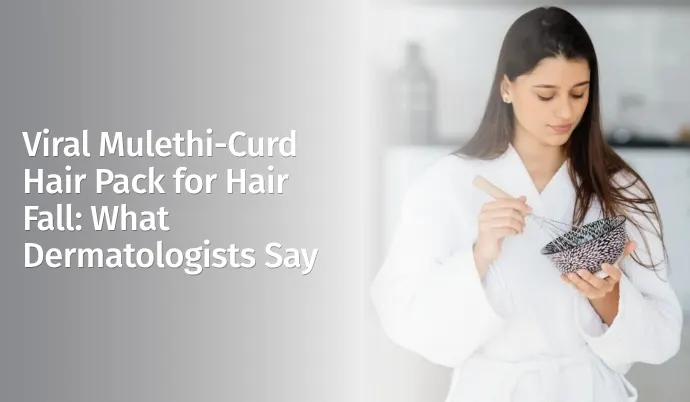
Across India, a massive hair care revolution is unfolding. Indian consumers are actively shifting away from harsh chemical treatments and synthetic hair products in a collective pursuit of thick, lustrous, and naturally healthy hair. This desire for clean, natural beauty has fueled a widespread obsession with kitchen-shelf remedies. Social media feeds regularly showcase viral DIY hair masks featuring traditional Ayurvedic ingredients like licorice root (Mulethi) mixed with rich, soothing curd. We are often taught that if an ingredient is natural, slathering it onto the scalp must be revolutionary for stopping hair loss.
However, jumping onto viral DIY trends without understanding scalp biology can often lead to unexpected frustration, clogged hair follicles, or aggravated scalp conditions. While natural ingredients carry centuries of traditional usage, understanding how they interact with hair growth cycles is essential.
Key Takeaways: Quick Summary
The Science Behind the Ingredients
To evaluate whether the mulethi-curd hair pack for hair fall actually works, it helps to examine the biological properties of both key components:
1. Mulethi (Licorice Root)
2. Curd (Yogurt)
What Dermatologists Say: Does Mulethi Really Stop Hair Fall?
While dermatologists acknowledge the soothing and conditioning benefits of a mulethi-curd hair pack for hair fall, clinical experts emphasize managing expectations:
How to Safely Use the Mulethi-Curd Hair Pack
If you want to incorporate this traditional pack into your regular hair care routine, follow these dermatologist-recommended steps to protect your scalp:
Step 1: Patch Test First
Before applying the mixture to your entire scalp, apply a small portion behind your ear or on your inner arm. Wait 24 hours to ensure you don't experience contact redness, itching, or swelling.
Step 2: Prepare a Lightweight Mixture
Mix 1 to 2 tablespoons of fine Mulethi powder with fresh, unsweetened curd (preferably plain, home-set curd without added fats or sugars). Blend until you achieve a smooth, lump-free paste.
Step 3: Proper Application
Step 4: Thorough Rinsing
Rinse thoroughly with lukewarm water, followed by a gentle, sulfate-free cleanser to remove all curd residues. Ensure no oil or protein film is left behind on the scalp.
Clinical Hair Care and Dermatological Expertise at Sir Ganga Ram Hospital (SGRH)
When hair shedding becomes excessive, persistent, or accompanied by visible scalp thinning, relying solely on home remedies can delay necessary medical intervention. The Department of Dermatology and Trichology at Sir Ganga Ram Hospital (SGRH) offers state-of-the-art diagnostic evaluations and clinical treatments for complex hair and scalp disorders in India.
Why Patients and Families Trust SGRH for Trichology:
Conclusion
The viral mulethi-curd hair pack for hair fall offers great natural conditioning and soothing benefits for a dry, irritated scalp. However, it is not a magic cure for structural or systemic hair loss. By understanding its limitations, applying it safely, and combining natural care with clinical trichological guidance when necessary, you can maintain a clean scalp, strong hair shafts, and long-term hair health.
Connect with the specialized clinical consultants at the Department of Dermatology at Sir Ganga Ram Hospital to map out your personalized hair health evaluation today.
Book an appointment with SGRH today.
Frequently Asked Questions (FAQs)
Q1: Can the mulethi-curd hair pack cure severe hair fall permanently?
A: No. While it conditions the hair shaft and calms scalp irritation—which reduces breakage, it cannot cure systemic hair fall caused by hormonal imbalances, genetics, or nutrient deficiencies.
Q2: How often should I apply a mulethi-curd hair mask?
A: Using the pack once a week or once every two weeks is ideal. Overusing heavy kitchen masks can lead to residue buildup and scalp congestion.
Q3: Is curd good for an oily, dandruff-prone scalp?
A: Caution is advised. The fats in curd can feed the yeast responsible for fungal dandruff (Malassezia). If you have an oily scalp or active seborrheic dermatitis, opt for lighter, aloe vera-based or clinically formulated scalp treatments instead.
Q4: Can Mulethi powder cause allergic reactions on the scalp?
A: Though rare, natural botanical powders can trigger contact dermatitis in sensitive individuals. Always perform a 24-hour patch test before full application.
Q5: What is the difference between hair breakage and hair fall from the root?
A: Hair breakage occurs when the hair shaft snaps due to dryness or damage, usually leaving a shorter strand without a tiny white bulb at the end. Hair fall from the root involves the entire hair strand shedding from the follicle, typically showing a small white bulb at the tip.
Q6: When should I see a dermatologist for hair loss?
A: You should consult a trichologist or dermatologist if you notice sudden, excessive shedding (more than 100 strands a day), visible scalp thinning, patchy bald spots, or persistent scalp pain and itching that does not improve after 2 to 3 weeks.