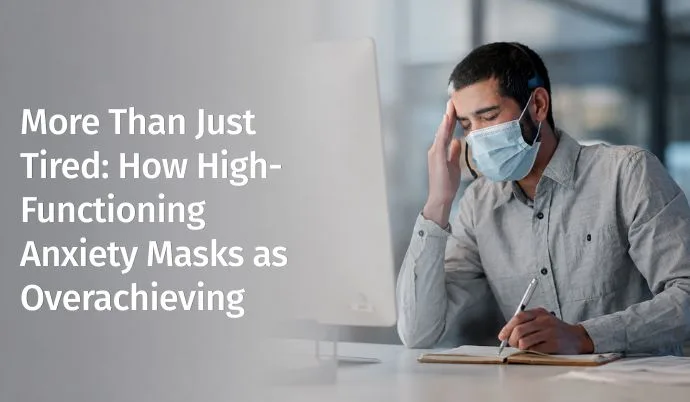
On the outside, you look like the ultimate picture of success. You are the one who never misses a deadline, arrives early to every meeting, meticulously organizes group projects, and constantly pushes for the next professional milestone. People call you driven, dependable, and a natural overachiever.
But on the inside, the engine driving that success isn't ambition, it is fear.
For thousands of working professionals and student overachievers, a common question of quiet exhaustion is: "How do I know if I'm just driven or if I am dealing with high-functioning anxiety?"
The scope of this issue is remarkably vast among the next generation. According to data from UNICEF, anxiety severely impacts India's youth, with approximately 30% of young adults (18–25 years) dealing with anxiety disorders and up to 11% of students reporting anxiety symptoms. In adolescents (10–19 years), around 14% live with diagnosed mental health disorders, driven frequently by heavy academic pressure and continuous digital overexposure.
In corporate hubs across Gurgaon, Bengaluru, Mumbai and Pune, this dilemma is reaching critical levels. Because modern Indian professional and academic spaces heavily reward a hyper-competitive hustle culture, it is incredibly easy to mistake a state of chronic, low-grade survival for simple motivation. When anxiety is "high-functioning," it doesn't cause you to freeze or avoid tasks; instead, it forces you into overdrive. This doctor-approved guide breaks down the subtle high-functioning anxiety signs, contrasts the structural differences of burnout vs anxiety, and outlines why true recovery depends on mastering nervous system regulation..
Key Takeaways
How do you tell the difference between healthy drive and high-functioning anxiety?
Ambition and high-functioning anxiety can look identical from the outside, but they feel completely different internally. To determine which force is running your life, contrast these core emotional patterns:
| Core Emotional Attribute | Healthy Professional Drive | High-Functioning Anxiety |
|---|---|---|
| Primary Motivation | A clear desire to grow, learn, create, or achieve a meaningful goal. | An intense fear of failure, letting others down, or being exposed as incompetent. |
| The Inability to Rest | You can comfortably turn off your phone, enjoy a weekend, and feel recharged. | Rest creates intense guilt or panic; you feel compelled to remain constantly busy. |
| Response to Mistakes | Disappointment, followed by logical problem-solving and self-compassion. | Catastrophizing, severe self-criticism, and replaying the error for days. |
| Boundary Setting | Saying "no" to extra work when your schedule is full feels healthy and normal. | Saying "no" triggers severe anxiety, leading to people-pleasing and chronic overcommitment. |
What are the signs of high-functioning anxiety?
Because this pattern hides behind a wall of trophies and corporate promotions, the symptoms are primarily internal and behavioral. Look closely for these high-functioning anxiety signs:
Difference between Burnout and Anxiety?
When you live with high-functioning anxiety, you are highly vulnerable to crashing into severe physical exhaustion. However, understanding the difference between burnout vs anxiety is critical for mapping out the correct therapeutic recovery plan:
How can you use nervous system regulation to step out of survival mode?
You cannot simply tell an anxious mind to "stop worrying." Because anxiety is rooted in a physiological survival response, recovery must start within the body. Incorporate these foundational nervous system regulation strategies to safely lower your baseline tension:
How does Sir Ganga Ram Hospital (SGRH) guide professionals through anxiety recovery?
Undoing years of high-functioning anxiety and chronic stress requires a compassionate medical team backed by clinical multi-specialty depth. The Department of Psychiatry and behavioral medicine wings at Sir Ganga Ram Hospital (SGRH) provide structured, evidence-based pathways to help professionals reclaim true wellness.
Why Families and Professionals Trust SGRH for Care:
Conclusion
Being driven is a wonderful asset, but running your life on the compounding fuel of high-functioning anxiety is an unsustainable path that inevitably leads to burnout. True professional success does not require you to sacrifice your physical health or inner peace. By learning to identify the clear high-functioning anxiety signs, separating burnout vs anxiety, and prioritizing daily nervous system regulation, you can step away from a state of constant survival and enjoy a vibrant, balanced future.
Connect with the specialized clinical consultants at the Department of Psychiatry or the Institute of Child Health & Behavioral Pediatrics Wings at Sir Ganga Ram Hospital to map out your comprehensive mental health and wellness evaluation today.
Book an appointment with SGRH today.
Your Questions Answered (FAQs)
Q1: Can high-functioning anxiety cause physical health issues over time?
A: Yes, absolutely. When high-functioning anxiety keeps your body in a chronic state of fight-or-flight, it releases a continuous flood of stress hormones like cortisol and adrenaline.
Q2: How do clinical teams diagnose high-functioning anxiety if a person appears highly successful?
A: Because "high-functioning anxiety" is a descriptive behavioral term rather than a formal standalone category in the DSM-5, specialists evaluate the patient's underlying emotional baseline.
Q3: What is the first logistical step to take when trying to heal a dysregulated nervous system?
A: The most effective initial step is to conduct an honest time audit and establish strict macro-breaks. Set a firm boundary to halt all professional communication at a specific hour every evening, remove work email applications from your personal mobile device.
Q4: Can long-term high-functioning anxiety trigger clinical depression?
A: Yes, it frequently does. When a professional spends years running on anxious overdrive, the nervous system eventually reaches a point of total exhaustion. The transition from the hyper-vigilant state of anxiety to the depleted state of burnout can cause a significant neurochemical drop.
Q5: Why does high-functioning anxiety often manifest as people-pleasing or an inability to delegate tasks?
A: At its core, the behavior is an unconscious defense mechanism designed to prevent rejection, failure, or criticism. Overachievers often feel that delegating a task introduces an unpredictable variable they cannot control.
Q6: What logistical steps should a professional take before their first clinical consultation at SGRH?
A: To optimize your initial evaluation, it is highly recommended to bring a comprehensive list of any ongoing medical prescriptions and recent physical health test reports (such as thyroid or vitamin panels).