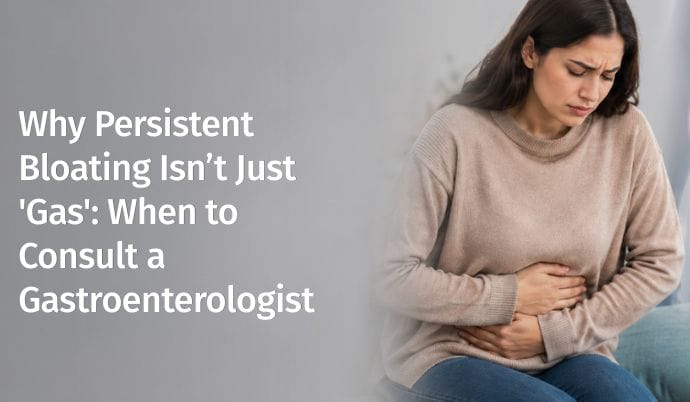
We have all been there feeling a little uncomfortably full after a massive holiday feast or a heavy visual spread of fast food. Usually, it passes within a few hours, dismissed as a temporary bout of standard gas. But what happens when that tight, distended, heavy feeling becomes your daily baseline?
For thousands of individuals, bloating stops being an occasional inconvenience and turns into a frustrating, chronic struggle. A common cry of exhaustion among patients is: "I feel bloated after every meal regardless of what I eat. What could be the underlying medical cause?"
The scale of this digestive crisis is incredibly widespread across the country. According to data highlighted by The Hindu, studies indicate that seven out of ten Indians suffer from some form of gastric problem. When your abdomen consistently feels like an overinflated balloon even after drinking plain water or eating a light salad, it is a clear signal from your digestive system that something more complex than simple "gas" is at play. This comprehensive guide breaks down when chronic swelling is a sign of a deeper functional disorder, the most common clinical culprits, and when it is time to stop guessing with home remedies and partner with a specialized gastroenterologist.
Key Takeaways
What are the common causes of chronic bloating?
If you find yourself asking, "I feel bloated after every meal regardless of what I eat. What could be the underlying medical cause?", you are already dealing with chronic abdominal distension. When symptoms occur multiple times a week for months, it usually means your gastrointestinal (GI) tract is either struggling to move food through its channels or reacting to an imbalance in its internal microbiome.
Here are the most common medical explanations that a gastroenterologist will evaluate:
1. Irritable Bowel Syndrome (IBS)
IBS is a widespread functional gastrointestinal disorder characterized by abnormal communication between the brain and the gut. This can cause the muscles in your intestines to spasm or move too slowly, trapping gas and fluid. Individuals with IBS often experience visceral hypersensitivity—meaning even normal amounts of digestive gas feel intensely painful and distended to their nervous system.
2. Small Intestinal Bacterial Overgrowth (SIBO)
Your large intestine is supposed to house the vast majority of your gut microbiome. However, if your gut motility slows down, bacteria can migrate backward into the small intestine. When you consume any form of carbohydrate or fiber, these misplaced bacteria immediately ferment the food prematurely, releasing massive amounts of hydrogen and methane gas within minutes of eating.
3. Gastroparesis (Delayed Gastric Emptying)
This condition causes the stomach muscles to work poorly or not at all, significantly slowing down the movement of food into the small intestine. Because food sits in the stomach for an abnormally long time, it creates intense upper-abdominal bloating, early fullness (feeling completely stuffed after just a few bites), and frequent nausea.
4. Hidden Food Intolerances and Autoimmune Shifts
When is bloating a medical emergency?
While bloating is incredibly uncomfortable, it can occasionally serve as an early warning sign for severe, structurally complex medical emergencies, including inflammatory bowel disease (IBD), severe gallbladder disease, or even certain abdominal malignancies.
Seek Immediate Expert Care If Your Bloating Is Combined With:
Advanced Gastroenterology and Diagnostic Precision at Sir Ganga Ram Hospital (SGRH)
Isolating the precise biological cause of chronic abdominal swelling requires an experienced medical center backed by next-generation diagnostic lines. The Department of Liver, Gastroenterology and Pancreatico-biliary Sciences at Sir Ganga Ram Hospital (SGRH) stands as a trusted center for advanced digestive care in India.
Why Families Trust SGRH for Digestive Health:
Conclusion
Persistent bloating that occurs after every single meal is not a symptom you have to quietly accept or manage with over-the-counter antacids. It is a clear medical indicator that demands structured diagnostic mapping. By understanding the underlying medical causes, recognizing the critical red flags, and aligning your care with a legacy medical institution, you can move past temporary band-aid solutions and restore true, long-term comfort to your digestive health. Connect with the specialized clinical consultants at the Institute of Liver, Gastroenterology and Pancreatico-biliary Sciences or the Department of Gastroenterology at Sir Ganga Ram Hospital to schedule your comprehensive diagnostic workup today.
Book an appointment with SGRH today,
FAQs
Q1: How can a doctor tell the difference between standard gas and SIBO?
A: Standard digestive gas typically builds up slowly throughout the day and is relieved by movement or passing gas. SIBO, on the other hand, causes a rapid, visible distension of the abdomen within 30 to 60 minutes of eating, regardless of the meal size.
Q2: What is a low-FODMAP diet, and can it fix my bloating?
A: FODMAP stands for Fermentable Oligosaccharides, Disaccharides, Monosaccharides, and Polyols. These are specific types of short-chain carbohydrates and sugar alcohols that are notoriously difficult for the human small intestine to absorb.
Q3: Can stress and anxiety cause physical bloating after every meal?
A: Yes, absolutely. The gut and the brain are directly linked by millions of nerves known as the gut-brain axis. High levels of chronic stress or anxiety trigger the body's fight-or-flight response, which can cause blood flow to divert away from the digestive tract.
Q4: Can long-term unmanaged chronic bloating lead to dynamic nutritional deficiencies?
A: Yes, definitely. If your bloating is caused by underlying structural issues like untreated celiac disease, severe IBD, or small intestinal bacterial overgrowth, the delicate mucosal lining of your intestines can become inflamed or damaged.
Q5: What are the primary lifestyle adjustments I should prioritize while waiting for my clinical GI appointment?
A: To help minimize severe abdominal distension, focus on simple behavioral modifications: eat smaller, more frequent meals throughout the day instead of three large portions, chew your food thoroughly to reduce excess air intake, and avoid carbonated beverages or artificial chewing gums.
Q6: What baseline logistical instructions must a patient follow before scheduling an upper GI endoscopy or colonoscopy?
A: For an upper GI endoscopy, patients must observe a strict 6-to-8-hour fasting window prior to the procedure—consuming absolutely no food, liquids, or water. For a colonoscopy, you will be prescribed a specialized clinical bowel-preparation liquid to consume the day before to completely clear out the large intestine.