For millions living with chronic respiratory conditions, winter signals a daily battle for breath, often marked by increased wheezing and chest tightness. The season creates a "perfect storm" for the lungs. WHO estimates that for the approx. 235 million asthma and 251 million COPD sufferers globally, disease exacerbation is directly tied to air pollution levels, which fluctuate based on specific meteorological parameters like ambient temperature, humidity, and wind speed.
Consequently, hospital admissions peak significantly during these colder months. For patients in North India, particularly Delhi-NCR, this risk is compounded by thermal inversion. This phenomenon traps pollutants close to the ground, creating a toxic smog that is hazardous to breathe. Understanding these mechanics is the first line of defense.
Key Takeaways
- The Cold Shock: Sudden exposure to cold air triggers immediate bronchospasm (tightening of airways).
- The Moisture Trap: Cold air strips the airways of moisture, leading to irritation.
- Indoor Risks: Heaters can circulate dust and dry out the air, worsening symptoms.
- Viral Load: Flu and pneumonia viruses, which thrive in winter, are leading causes of COPD flare-ups.
- Inhaler Protocol: Your rescue inhaler needs specific care and technique during cold spells.
How Does Cold Air Affect Lungs?
Why exactly does cold air hurt? When you inhale freezing air, your body attempts to warm and humidify it before it reaches the delicate tissues of the lungs. However, for those with asthma in winter or COPD, this process is overwhelming.
1. Bronchial constriction
Cold air directly irritates the airways. The sensory nerves located in bronchial tubes respond to the presence of cold air and cause contraction of the muscles that surround the airways, resulting in bronchoconstriction. The lungs have less space available for airflow, resulting in difficulty exhaling.
2. Mucus Thickening
The airways have mucosal lining which is a fluid layer supporting the airways by trapping dust, bacteria etc. In the cold dry winter the mucosal fluid evaporates quickly and as a result the body tries to compensate for this by producing thicker, stickier mucus. Patients suffering from Chronic Obstructive Pulmonary Disease (COPD) already have problems clearing their airways of mucus and now are unable to easily expel this thickened phlegm, which increases their risk of infection.
3. Inflammation surge
Drying of winter air triggers the cells lining airways to release inflammatory chemicals, which causes swelling of the airways. This combined with bronchoconstriction causes the classic symptoms of wheezing and shortness of breath.
Identifying COPD Symptoms in Winter
COPD is an increasingly debilitating illness, and while cold weather may trigger rapid worsening of the condition and the need for hospital admission. Therefore, it is important to recognize the difference between an 'off day' and an emergency.
Watch for the following signs that coincide with the worsening of COPD:
- Increased Shortness of Breath: Feeling winded with less activity than normal (for example, while dressing)
- Changes in Sputum: Any change in the color (yellow/green/brown), consistency or the amount of your phlegm.
- Very Tired: Due to the increased effort required to breathe.
- Confused: Extreme cases of confusion or disorientation occur when you experience low oxygen levels or too much carbon dioxide in your body at one time.
- Morning Headaches: This symptom indicates that during sleep the body does not have a sufficient supply of oxygen to meet the needs of the brain.
Should You Use a Humidifier for Asthma and COPD?
This item is often the subject of inquiry. Given that dry air precipitates nasal allergy symptoms, it is reasonable to assume that increasing the humidity in an area with a humidifier would prove effective. However, the reality is more complex than it seems.
Benefits:
When used in conjunction with other products, humidifiers can hydrate the nasal passages, thus lessening the negative impact of heaters on breathing and helping to create thinner and more easily eliminated mucus. The ideal indoor humidity for human respiratory health is between 30% and 50%.
The Risks (The "Humidifier Lung"):
Improper maintenance of a humidifier can pose several risks to your health.
- Mold and Bacteria - Stagnant water serves as a habitat for molds and bacteria. If the humidifier has not been cleaned properly, it will disperse these microorganisms directly into the airways and may lead to exacerbation of asthma during cold weather or respiratory infections.
- Dust Mites - Dust mites are a known trigger for asthma and will thrive in high humidity conditions (over 50%).
The Rules:
Yes, use a humidifier, but follow these strict rules:
- Use Distilled Water: Tap water contains minerals that can irritate lungs (creating "white dust").
- Clean Daily: Empty the tank, dry it, and refill it every day.
- Monitor Humidity: Use a hygrometer to ensure the room does not get too damp (above 50%).
Essential Inhaler Usage Tips for Cold Weather
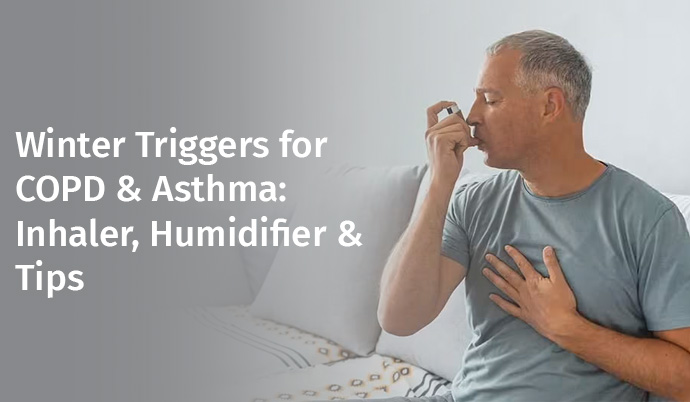
Your inhaler is a vital tool for managing your asthma and certain chronic lung diseases, but temperatures can impact your ability to use the inhaler properly and how effectively you absorb the medication. Below are a few essential points to keep in mind when using your inhaler in cold weather:
- Maintain a Warm Environment for Your Inhaler
Most metered-dose inhalers (MDIs) contain a propellant that delivers the medication via the pressurized spray. If the inhaler is stored at lower-than-optimal temperatures, the propellant may become sluggish, and you won’t be able to receive a complete dose.
● Tip: Never leave your inhaler in the cold overnight in your car. It’s best to store your inhaler close to your body, either in an inside coat pocket or in a warm area while you are walking or outdoors.
- Use a Spacer Device
The cold air causes us to breathe in smaller amounts that have less depth than normal. This hinders the ability to successfully coordinate the "press-and-breathe" method needed for a standard inhaler.
● Tip: Also, remember to use a spacer (holding chamber) at all times; it allows the medication to be held as a suspension in order to allow you to inhale at a slower rate with deeper lung inhalation, thus reducing or eliminating the risk of having the medication touch the back of your throat.
- The "Scarf Technique"
Prevention is the best option. If you are prescribed a preventative inhaler by your doctor, you should take a dose of the inhaler prior to being exposed to cold weather.
● Tip: You can also wear a scarf loosely around your nose and mouth. This will create a warm area of air which will help to warm up and add moisture to the air before it enters into your lungs, preventing the reaction that causes the initial spasm.
Lifestyle Tips to Protect Lungs in Winter
Beyond medication, your environment plays a massive role in managing COPD symptoms.
- Establish a Clean Room - If you live in a city with high levels of pollution, you should consider getting a HEPA air purifier for your bedroom. A HEPA air purifier will help reduce the amount of fine particulate matter (PM2.5) that gets into your lungs.
- Exercise Indoors - Exercise is very good for your lungs, but during winter months, heavy breathing through cold air can be dangerous. During these months, you should try to participate in indoor exercise activities such as yoga or treadmill walking.
- Consider Indoor Heat - There are many types of fireplaces available (including vented gas fireplaces or wood-burning stoves), but each of them releases irritants into the air. If you have asthma or any other lung condition, you are better off with electric or radiant heating options. Be sure to vacuum every week or so to remove the dust that your heater has circulated throughout the room.
- Get Vaccinated - During the winter, influenza and pneumonia are the most lethal threats to people with COPD. Make sure you have received your annual influenza vaccine and pneumococcal vaccine every year.
Conclusion
Winter does not have to be a season of suffering for asthma and COPD patients. By understanding the triggers, from dry air to viral infections and adapting your routine with proper inhaler usage tips and humidity control, you can breathe easier.
Do not ignore persistent symptoms. If you find yourself using your rescue inhaler more than twice a week, your condition is not under control.
The Department of Internal Medicine & Pulmonology at Sir Ganga Ram Hospital offers comprehensive Pulmonary Function Testing (PFT) and personalized action plans to help you navigate the winter months safely.
FAQs on Winter Respiratory Health
Q: Can I stop using my inhaler if I'm feeling okay during winter months?
A: No, not at all. The cold winters are the most hazardous time to end preventative therapies; the potential for inflammation is still lurking beneath the surface of feeling well. Stopping your controller inhaler puts you at greater risk for an attack if something triggers your airways (i.e., the sudden blast of cold air).
Q: Does drinking cold water make asthma worse during cold weather?
A: Yes, it can. Drinking ice water decreases the temperature of the esophagus directly beside the bronchial tubes/trachea. That temperature lower can cause a contraction reflexively making it more difficult for you to breathe. It would be best to drink warm or heated liquids instead because they are less likely to trigger this reflex and they will thin the mucus secretions.
Q: How do I differentiate between a cold and an asthma exacerbation?
A: Distinguishing between colds and asthma aggravations can be difficult, as colds frequently cause exacerbations of asthma. However, what usually characterizes a cold is the presence of a cough, a runny nose, and possibly a fever (usually less than 102ºF). If you are primarily wheezing, are experiencing chest tightness, and wake at night gasping for breath (yet do not have a fever), it is most probably an exacerbation of asthma that will require a modification of your inhaler regimen.