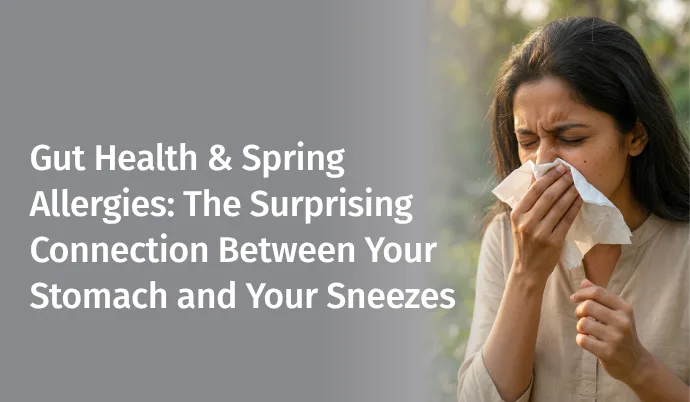
As spring arrives and flowers begin to bloom, millions of people brace themselves for weeks of itchy eyes, runny noses, and relentless sneezing. If you suffer from seasonal allergies, you likely blame the pollen, the trees, or the dusty spring wind. But modern medical research reveals a shocking plot twist: the real reason for your sneezing fits might actually be sitting right inside your stomach.
It sounds strange, but your immune system's reaction to spring allergens is heavily controlled by the bacteria living in your digestive tract. In fact, roughly 70% to 80% of your body's immune cells live directly in your gut.
When the trillions of bacteria in your stomach are out of balance, usually due to a poor diet, high stress, or taking too many antibiotics, your immune system becomes highly confused and hyperactive. Instead of ignoring a harmless speck of spring pollen, your body treats it like a deadly virus, launching a massive, exhausting allergic attack.
By understanding the critical link between your digestive tract and your respiratory system, you can stop relying solely on temporary allergy pills and start healing your allergies at their root source.
Key Takeaways: Quick Summary
What is the link between gut health and immunity?
Think of your gut as a training center for your immune system. Good bacteria teach your immune cells to attack real threats (like a cold virus) and ignore completely harmless things (like spring pollen).
Your intestines are lined with millions of immune cells that constantly communicate with the trillions of bacteria living inside you.
In this confused, freaked-out state, your immune cells can no longer tell the difference between a real sickness and a simple piece of pollen. As a result, they aggressively attack the pollen, triggering a miserable allergic reaction.
What are the hidden seasonal allergy causes inside your stomach?
The two primary stealth seasonal allergy offenders are Leaky Gut Syndrome and histamine intolerance. Your intestinal lining operates like a screen and when it’s damaged, toxins leak into your blood, sending signals to your immune system to put the body on high alert, over-reacting to things like spring pollen.
Now, a tight net is how your gut lining should function. It should allow only well-digested, healthful nutrients to enter your bloodstream. But a diet rich in ultra-processed junk foods, excess sugar, and chronic stress can rip tiny holes into this net, a problem physicians have named “Leaky Gut.”
How can I improve my gut microbiome health to stop sneezing?
You can drastically improve your gut health by eating a diverse range of fiber-rich plant foods, adding natural fermented foods to your diet, cutting out refined sugars and junk food, and avoiding unnecessary antibiotics.
How do experts at SGRH treat severe allergies and gut issues?
The medical experts at Sir Ganga Ram Hospital (SGRH) go beyond prescribing temporary allergy pills. We combine immunology and gastroenterology to heal your gut lining and permanently calm your hyperactive immune response.
At Sir Ganga Ram Hospital, we understand that simply suppressing your sneezes with over-the-counter antihistamines does not solve the root problem. Our Department of Immunology and Department of Gastroenterology work together to provide comprehensive, root-cause medical care.
Don't Let Spring Allergies Keep You Indoors
If you are tired of spending every spring trapped indoors with a box of tissues, it is time to look deeper than your sinuses. Healing your digestive system is the ultimate defense against environmental triggers.
Book a consultation with the Immunology and Gastroenterology specialists at Sir Ganga Ram Hospital today to heal your gut and breathe easy this season!
Frequently Asked Questions (FAQs)
Q1: Is it possible for a probiotic pill to actually cure my spring allergies?
A: Although a probiotic is not a magical overnight cure, clinical studies have shown that specific formulations of good bacteria can help reduce hay fever severity (sneezing and runny nose) significantly over time by helping to calm the immune system.
Q2: Are seasonal allergies worsened by eating sugar and junk food?
A: Yes. Refined sugar and the artificial fats in junk food nourish the bad bacteria in your gut and literally raise inflammation levels in your body. This makes your immune system significantly more reactive and sensitive to pollen and dust.
Q3: How long will it take for my allergies to be different if I repair my gut?
A: The lining of the gut will regenerate fairly quickly. With strict dietary modification, stress management, and a few strategically chosen probiotics, many patients start to experience less bloating, as well as a reduction in allergy symptoms (if present), in 4 to 8 weeks.
Q4: When do I need to get a doctor involved for my seasonal allergies?
A: If you’ve already tried over-the-counter allergy meds and have had no results, or your allergies are provoking your asthma, shortness of breath, or chronic bloating along with the sneezing—then it’s time to see a specialist at SGRH.