Indian skin is beautifully unique, but it faces specific challenges. Between the intense tropical sun, urban pollution, and our biological tendency to overproduce melanin when injured, issues like stubborn hyperpigmentation, melasma, and dark acne scars are a daily struggle for millions.
For decades, achieving flawless skin meant relying on slow-acting home remedies or risking harsh chemical peels at neighborhood salons. Today, advanced laser skin treatments are the medical gold standard for safely erasing deep scars, melting away pigmentation, and reversing sun damage.
However, confusing medical jargon and tragic stories of botched salon treatments leave many patients intimidated. If you are considering a laser procedure, here is your quick, evidence-based guide to the genuine benefits, realistic results, and true cost factors of laser treatments in India.
Key Takeaways: Quick Summary
How Do Laser Skin Treatments Actually Work?
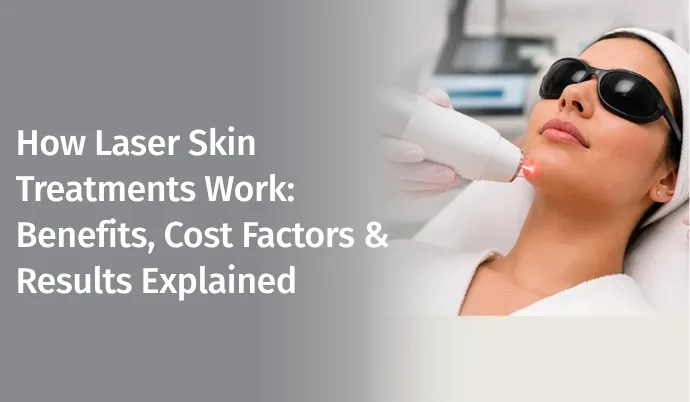
The word LASER is actually an acronym. It stands for Light Amplification by Stimulated Emission of Radiation. In the realm of dermatology, a laser is simply a sophisticated machine that produces a single, highly concentrated, and incredibly powerful wavelength of light.
When this focused light hits your skin, it does not just burn everything in its path. It is programmed to target a specific "chromophore"—a part of the skin that naturally absorbs that exact wavelength of light. Depending on the specific type of laser your doctor uses, that target could be:
Ablative vs. Non-Ablative: Understanding the Types of Lasers
When you look at a cosmetic clinic's menu, you will see dozens of fancy brand names, but almost all lasers fall into two main medical categories. Knowing the difference is crucial for managing your expectations and your downtime.
1. Ablative Lasers (The Heavy Hitters)
Ablative lasers (like Fractional CO2 lasers and Erbium YAG) are intense and aggressive. They completely vaporize and remove the top layer of your skin (the epidermis) while simultaneously heating the underlying layer (the dermis).
2. Non-Ablative Lasers (The Gentle Builders)
Non-ablative lasers (like Nd:YAG, Fraxel, or intense pulsed light/IPL) are much gentler. They pass straight through the top layer of your skin without damaging or breaking the surface, exclusively heating the tissue underneath to stimulate collagen.
The Top 4 Benefits of Laser Skin Treatments
Why are dermatologists so enthusiastic about laser technology? Because it offers profound structural benefits that topical creams, serums, and traditional spa facials simply cannot match:
1. Unmatched Precision and Control
Unlike harsh chemical peels, which apply acid to the entire face and hope for an even result, a laser is a precision instrument.
2. Permanent Structural Changes
Anti-aging creams and moisturizers sit on the surface of your skin, temporarily plumping it with hydration. Lasers, on the other hand, physically alter the architecture of your skin from the inside out.
3. Safe Eradication of Stubborn Pigmentation
For Indian skin, treating hyperpigmentation, melasma, and dark acne marks left behind by old breakouts is notoriously difficult.
4. Effective Acne Scar Revision
Deep "ice pick," "rolling," or "boxcar" acne scars are physical indentations in the skin; they cannot be scrubbed away with exfoliants.
Understanding the Cost Factors of Laser Skin Treatments in India
When you visit a reputed, clinical dermatology center in India, the cost of your treatment plan will be influenced by several key variables:
What Results Can You Actually Expect?
Setting realistic expectations is vital for your peace of mind. A laser is a medical tool, not an instantaneous magic eraser.
Immediate Aftermath: Immediately after an ablative laser (like CO2), your skin will look and feel like it has a severe sunburn. It will be red, swollen, and tight. Within a few days, it will begin to peel and flake aggressively.
The Timeline: You will start seeing a noticeable "glow," tighter pores, and smoother texture about 3 to 4 weeks after your first session. However, the true, final results of scar reduction and skin tightening will not be visible until 3 to 6 months after your final session is complete.
Aftercare for laser treatments
Your skin is in a highly vulnerable, healing state after a laser procedure. How you treat it at home dictates your final results and prevents complications:
Expert Dermatology at Sir Ganga Ram Hospital (SGRH)
When dealing with powerful optical lasers, the machine is only as good as the doctor operating it. Indian skin (Fitzpatrick types III to V) requires highly calibrated, precise settings to avoid a complication called Post-Inflammatory Hyperpigmentation (PIH), where the laser actually causes the skin to turn darker in response to the heat.
At the Department of Plastic, Cosmetic & Hand Microsurgery at Sir Ganga Ram Hospital (SGRH), we prioritize clinical safety over cosmetic trends. Our board-certified dermatologists utilize state-of-the-art, US-FDA-approved laser platforms to treat a wide array of medical and aesthetic skin conditions. Because we operate within a multi-specialty hospital environment, every procedure is conducted under the strictest medical protocols. We ensure that you achieve the best possible aesthetic results without ever compromising the health and integrity of your skin.
Stop trusting your face to neighborhood salons. Schedule a professional laser consultation at SGRH today to discover which technology is right for your unique skin type and concerns.
Frequently Asked Questions (FAQs)
Q1: Do laser skin treatments hurt?
A: Pain is highly subjective, but most patients tolerate lasers very well. For non-ablative treatments (like laser toning or hair reduction), it feels like a small rubber band lightly snapping against the skin.
Q2: Does laser treatment thin the skin over time?
A: This is one of the most common and damaging myths. The exact opposite is true! While an ablative laser temporarily removes the dead, outer layer, the ultimate goal of all lasers is to stimulate deep collagen production.
Q3: Are the results of a laser treatment permanent?
A: It depends entirely on what you are treating. Laser removal of a tattoo, an age spot, or broken capillaries is usually permanent. The structural remodeling and smoothing of deep acne scars are also permanent.
Q4: Can I get a laser treatment if I have an active acne breakout?
A: It depends on the laser. You should absolutely not undergo an aggressive CO2 fractional laser over active, pus-filled pimples, as the physical trauma can spread the bacteria and cause a severe, full-face infection.