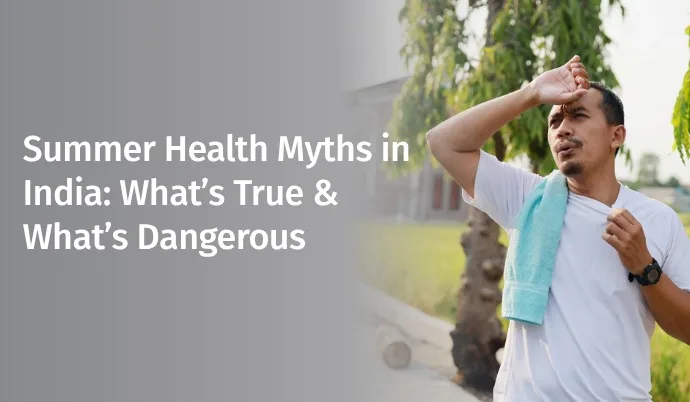
From our grannies' stories passed down through generations to viral WhatsApp forwards, the Indian summer brings with it a flood of "health rules" we blindly follow. We have all heard them: drinking chilled water immediately after coming from the sun will make you fall ill, or that eating mangoes is the direct cause of summer acne and heat boils. But how many of these ingrained beliefs are actually backed by medical science?
As temperatures rise across the plains of India, relying on outdated or incorrect health information can lead to unnecessary anxiety, poor dietary choices, and most dangerously, delayed medical care for heat-related illnesses. It is time to separate tropical fiction from clinical reality.
By understanding the truth behind summer health myths and facts, you can make smarter, evidence-based decisions for your body during the grueling heatwave months. Let's dive into the common misconceptions specific to the Indian context, outline the real symptoms of heat exhaustion, and provide science-backed treatment guides.
Key Takeaways: The Summer Essentials
1. You will fall ill if you drink Chilled Water After Being in the Sun
The Myth: If you come indoors from the 45°C heat and immediately drink a glass of ice-cold water, you will catch a severe sore throat, fever, or "thermal shock."
The Fact: Chilled water itself does not contain viruses or bacteria, so it cannot "cause" an infection. However, the extreme temperature transition can occasionally cause local irritation in the throat or esophageal spasms. The "illness" people feel is often a result of being in crowded, air-conditioned spaces where viruses spread easily, or simple dehydration.
Real Symptoms of Summer Heat Exhaustion:
Instead of worrying about water temperature, watch for these signs that the Indian sun is affecting you:
Treatment Guide for heat exhaustion:
2. Does AC Cause Pneumonia?
The Myth: Switching between a desert cooler/fan and an air conditioner, or staying in a very cold AC room, causes fluid to build up in the lungs (pneumonia).
The Fact: Pneumonia is a lung infection caused by pathogens, not by air conditioning. However, AC units significantly dehumidify the air. Dry air can irritate the nasal passages and throat, making you more susceptible to respiratory irritants.
Treatment Guide for Summer Respiratory Issues:
3. Is ORS only for Diarrhea?
The Myth: You only need to drink Oral Rehydration Salts (ORS) if you have an upset stomach. For summer heat, plain water is the only requirement.
The Fact: In the intense Indian summer, you lose more than just water through sweat; you lose essential salts like sodium and potassium. Drinking excessive plain water without replacing electrolytes can lead to a dangerous condition called hyponatremia.
Proper Hydration Treatment Guide:
4. Does Eating Mangoes Cause Acne
The Myth: Mangoes have a "hot" temperament (Taseer) and eating them directly results in skin eruptions and boils during the summer.
The Fact: There is no clinical evidence that mangoes cause acne or boils. Summer boils are usually bacterial skin infections (Staphylococcal) caused by increased sweating and clogged pores. However, mangoes are high in sugar and have a high Glycemic Index. High sugar intake can increase insulin levels, which in turn can trigger acne in some individuals.
Real Symptoms of Type 2 Diabetes to Watch For:
Since mango season coincides with high sugar consumption, be alert for:
5. Can I treat Loo/Heatstroke at home with onions?
The Myth: Rubbing raw onions on the body or drinking onion juice can cure a person suffering from a "Loo" (heatstroke).
The Fact: Heatstroke is a medical emergency where the body's internal temperature crosses 104°F (40°C). It can cause organ failure or death. Onions have no cooling properties capable of reversing this.
Treatment Guide for Emergency Heatstroke:
Why Evidence-Based Medicine Matters: How SGRH Can Help
In an era of viral misinformation, it is easy to fall victim to summer health myths that provide a false sense of security. True wellness during the Indian summer is built on scientific evidence, proper hydration protocols, and timely medical intervention.
At Sir Ganga Ram Hospital (SGRH), our multidisciplinary teams from department of Internal Medicine to department of Dermatology—are dedicated to providing treatments rooted in modern science. Whether you are dealing with a severe heat-related illness, managing diabetes during the fruit season, or seeking a routine summer health checkup, SGRH offers the expertise and state-of-the-art technology to provide personalized, fact-based healthcare.
Book an appointment with SGRH today.
Frequently Asked Questions (FAQs)
Q1: Does drinking tea or coffee in the summer dehydrate you?
A: Caffeine has a mild diuretic effect, but the water in the tea/coffee still contributes to your total intake. However, in 40°C+ heat, excessive caffeine can increase your heart rate. It is better to opt for non-caffeinated drinks like Aam Panna or Buttermilk (Chaas).
Q2: Can I get a tan even if I stay in the shade?
A: Yes. UV rays reflect off surfaces like sand, concrete, and even water. In India, the UV index is exceptionally high in summer; therefore, wearing sunscreen is necessary even if you are under a "Shamiana" or umbrella.
Q3: Is it safe to exercise outdoors in the afternoon?
A: It is dangerous. Peak sun hours in India (12 PM to 4 PM) carry the highest risk of heatstroke. Move your workout to early morning or late evening, or stick to an indoor, temperature-controlled environment.
Q4: Should we use "cooling" talcum powders for prickly heat?
A: While they provide a temporary cooling sensation, excessive powder can clog sweat pores, potentially making the prickly heat worse. Lightweight, breathable cotton clothing and frequent lukewarm showers are more effective.