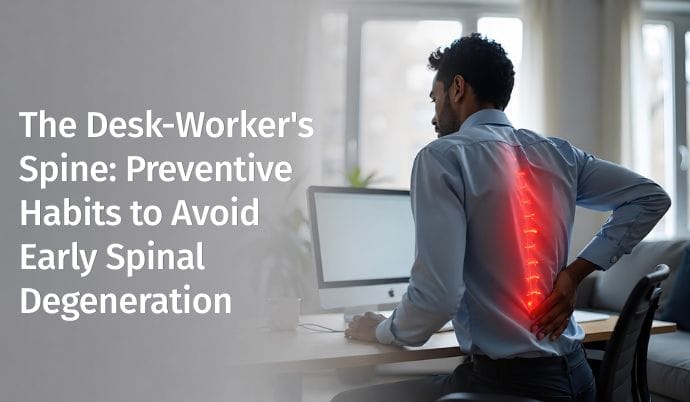
We often worry about pollution, junk food, or stress, but we rarely suspect the chair we are sitting on right now. In modern urban life, we move from the car seat to the office chair to the sofa, creating a cycle of inactivity that our bodies were never designed for.
The statistics are alarming. According to The Times of India, people who sat for six or more hours daily had a 19 percent higher chance of premature death compared to those who limited sitting to less than three hours.
This isn't just about weight gain. Prolonged sitting health risks extend to your heart, your blood sugar, and even your mental state. This blog explains why your comfortable office chair might be the most dangerous furniture in your house.
Key Takeaways: Quick Summary
1. Why is a "Sedentary Lifestyle" So Dangerous?
The body's physiology switches into 'storage mode' when an individual is seated for long periods. Electrical impulses to the large muscles of the legs are switched off, and energy expenditure drops to approximately one calorie per minute. There is also a 90% reduction in the activity of the enzymes that break down fatty tissue.
This physiological state is responsible for many effects on humans due to long periods of sedentary behavior; it not only means the body is no longer using energy efficiently but has also impaired its ability to process insulin. Hence, both sedentary individuals and 'skinny' individuals are at higher risk of developing type 2 diabetes due to sedentary lifestyles.
2. Does Sitting Affect Your Heart Health?
To maintain its strength, the heart must continually pump blood against gravity. Sitting for extended periods of time decreases the amount of oxygen available to the muscles, which can cause fatty acid deposits to accumulate in the heart.
Sitting too much health problems include a considerably increased risk of developing hypertension (high blood pressure) and having a high cholesterol level. In one study, men who spent over 23 hours per week watching television and being sedentary had a 64% higher likelihood of dying from cardiovascular disease compared to men who were sedentary for 11 or fewer hours per week.
3. What Physical Damage Does Prolonged Sitting Cause?
The toll that sitting has on your body's structures is something most people will notice first.
4. Is There a Link Between Sitting and Anxiety?
We assume sitting relaxes us, but the opposite is often true. Sedentary lifestyle effects are strongly linked to higher rates of anxiety and depression.
Most likely, the drop in "feel-good" hormones is involved. Endorphins and serotonin are released during physical activity and are at their highest levels while moving and gradually decrease when remaining immobile. Besides the drop in these hormones, the action of long periods of sitting and looking at a screen overstimulates the brain but doesn’t provide a physical outlet for the body, resulting in a "tired but wired" state that leads to trouble sleeping and changes to mood.
5. How Can You Fix the Risks Without a Gym?
The answer to the health risks associated with lengthy periods of sitting isn't to run 10km, but to engage in regular, low-intensity physical activity. Doctors recommend a form of 'Exercise Snacking' or periodic bursts of exercise:
Conclusion
The human body was engineered for movement, not stillness. While we cannot always escape our desk jobs, we can change how we work. By acknowledging the severe sitting too much health problems, you can take small steps literally to protect your future.
Don't wait for back pain or a diagnosis to get moving. The Department of Physiotherapy & Rehabilitation at Sir Ganga Ram Hospital can help you design an ergonomic workspace and a movement plan that fits your busy life.
Your next step? Book an appointment with SGRH today..
Frequently Asked Questions (FAQs)
Q1: Is a standing desk better than sitting?
A: Yes, but moderation is key. Standing all day can cause varicose veins and foot pain. The ideal approach is to alternate: sit for 45 minutes, stand for 15 minutes. The goal is postural variety, not just standing.
Q2: Can I undo the damage of sitting by working out?
A: Not entirely. Exercising for an hour does not fully cancel out 10 hours of sitting. Think of it like smoking—jogging doesn't make smoking safe. You need to exercise and break up your sitting time throughout the day.
Q3: What are the first signs of sitting too much?
A: Early signs include tight hip flexors, lower back stiffness, "foggy" brain in the afternoon, and swelling in the ankles (edema) due to poor circulation.
Q4: Does sitting affect digestion?
A: Yes. Sitting compresses your abdominal contents and slows down digestion (peristalsis). This is a common cause of bloating, heartburn, and constipation in office workers.
Q5: How many steps should I aim for daily?
A: While 10,000 steps is the popular goal, studies show that even 7,000 to 8,000 steps significantly reduces mortality risk. Focus on consistency rather than hitting a perfect number every day.
Q6: What is the correct posture if I must sit?
A: Follow the "90-90-90 Rule." Keep your knees, hips, and elbows at 90-degree angles. Your feet should be flat on the floor (or a footrest), and the top of your monitor should be at eye level so you don't look down and strain your neck.