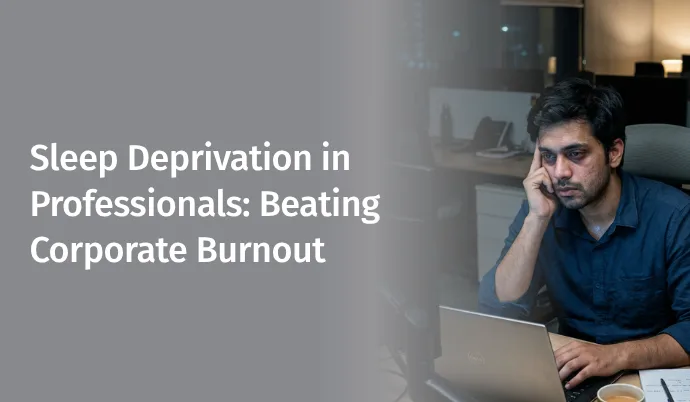
According to the Indian Journal of Public Health, 25.7% of Indians suffer from insomnia, while obstructive sleep apnea (OSA) affects about 37.4%. Another 10.6% experience restless leg syndrome. For the young corporate professionals, these statistics hit incredibly close to home. Between hours spent in traffic, late-night calls across global time zones, and the constant ping of work emails, turning your brain off at the end of the day feels nearly impossible. We have normalized surviving on four hours of sleep and three cups of black coffee as a "hustle culture" badge of honor.
However, sacrificing your rest to meet deadlines does not make you more productive; it destroys your brain's ability to focus, manage stress, and make basic decisions. If you are lying awake at 3 AM staring at the ceiling, you are not alone. Understanding the science of sleep and how to protect it is your best defense against a complete mental and physical collapse.
Key Takeaways
What exactly is sleep hygiene?
Sleep hygiene refers to the daily habits, routines, and environmental setups that help you get consistent, uninterrupted, and restorative sleep. It is not just about having a comfortable mattress; it is about what you do from the moment you wake up until you close your eyes.
Your sleep hygiene is as important as your dental hygiene. Just as you brush your teeth every day to prevent cavities, you need specific daily habits to prevent insomnia. Good sleep hygiene stabilizes your body's 24-hour internal clock (your circadian rhythm), making you naturally alert during the day and naturally drowsy at night.
Why can't I fall asleep even when I am exhausted?
This happens because your brain is overstimulated. Staring at screens emits blue light that stops your sleep hormones, while work stress keeps your adrenaline high. You might also be engaging in "revenge bedtime procrastination."
And this is one of the most frequent questions young professionals ask today. You put in a 12-hour shift, can barely keep your eyes open on the way home, but as soon as your head hits the pillow, your brain is switched on. Here’s the science explaining why:
What are the signs of burnout from my job?
The clearest signs and symptoms of burnout among professionals are waking up in the morning feeling exhausted, having debilitating “brain fog,” feeling emotionally drained or irritable, and hating to see Monday coming.
Here are some signs that you might be going through burnout:
What are the best sleep hygiene tips to fix my routine?
You can fix your sleep by creating a "digital sunset" (no screens 1 hour before bed), keeping your room cold and dark, stopping caffeine by 2 PM, and waking up at the exact same time every day.
Good sleep hygiene requires setting strict boundaries between your work life and your rest.
How does SGRH treat chronic sleep issues?
At Sir Ganga Ram Hospital, the Department of Sleep Medicine understands that telling a stressed professional to "just relax" does not work. We treat chronic sleep deprivation as a serious, highly treatable medical condition using a variety of tailored approaches:
Don't Let Your Job Steal Your Health
If you are waking up exhausted, struggling to focus at work, or feeling completely burnt out, your body is begging for a reset. You cannot outwork a sleep deficit forever.
Book a consultation with the Sleep Medicine specialists at Sir Ganga Ram Hospital today to take back your nights and restore your energy.
Frequently Asked Questions (FAQs)
Q1: How much sleep do I really need?
A: Although everyone is a bit different, most adults require approximately 7 to 8 hours of good quality sleep every night undisturbed sleep to let the brain physically repair itself and detoxify.
Q2: Is it safe to take melatonin gummies every night?
A: Melatonin can be useful for short-term problems such as jet lag, but it is not a long-term treatment for insomnia. Overusing them can interfere with your body’s own natural mechanism to manufacture the hormone. Always check with a doctor before taking sleep aids on a daily basis.
Q3: If I wake up at 3 AM and don’t fall asleep again?
A: Don’t reach for your phone to look at emails or the time! If you haven’t fallen back asleep in 20 minutes, get out of bed. Head to a dark room, read an uninteresting book or do some gentle stretching until sleepy and then return to bed.
Q4: Am I not sleeping because I exercise at night?
A: Yes, it can. Rigorous physical exercise elevates your heart rate, body temperature and adrenaline. It’s best to finish heavy exercise at least 3 to 4 hours before your bedtime so your body has time to cool off and relax.