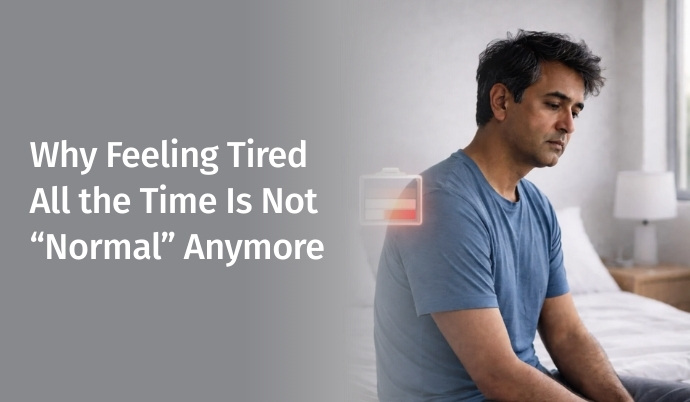
"I’m just tired."
In the past, fatigue was the price of hard labor. Today, it is a baseline state. We have normalized exhaustion so deeply that we no longer view it as a symptom. However, data suggests an energy crisis. According to the 2024 Supradyn Fatigue Survey, 85% of young Indians (aged 25-35) report waking up fatigued. Furthermore, 1 in 10 people suffer from TATT Syndrome (Tired All The Time).
This blog warns that persistent fatigue is rarely "just in your head." It is your body’s engine light flashing red. Here is why you must stop ignoring it.
Key Takeaways: Quick Summary
1. Is It Just Laziness or "TATT" Syndrome?
Recovery starts by distinguishing between normal tiredness and chronic tiredness symptoms. Normal fatigue occurs as a result of physical exertion and goes away when you sleep again.
On the other hand, TATT (tired all the time) has the following symptoms: "poor sleep (non-refreshing)" You can sleep for 10 hours and still wake up feeling horrible. TATT also includes "brain fog" or having difficulty concentrating/finding words. If you are experiencing fatigue for more than 2 weeks and are having to cancel your plans due to fatigue, this is a medical issue rather than an issue with your personality.
2. What Is Actually Draining Your Battery?
Chronic Fatigue is seldom one problem, but rather, it is a combination of many things that create a “perfect storm.”
3. Could You Be Running on Empty (Nutritional Deficiencies)?
First, before you worry about complicated diseases, check your fuel (i.e. your diet). Calcium and vitamin D deficiency are the typical reasons why you might feel fatigued all the time in India.
4. Is Your "Normal" Sleep Actually Keeping You Tired?
Are you really getting a good night’s rest during those 8 hours of sleep? Obstructive Sleep Apnea, or OSA, is when the muscles in your throat relax and cause a blockage of the airway. Therefore, you stop breathing for a short duration of time. After a few seconds, your brain recognizes that it hasn’t been getting enough oxygen, then wakes you up so you can take a breath. When this happens, it is called a “micro-awakening”. You could go through several of these an hour, preventing you from obtaining deep, restorative stages of sleep.
Red flag symptoms of OSA are: Loud Snoring, Dry Mouth, Morning Headaches and Daytime Drowsiness.
5. Is Your Thyroid Causing Your Fatigue?
Your thyroid acts like a thermostat in regulating your body temperature. The underactive thyroid is frequently occurring. When your thyroid slows down, your metabolism drops dramatically.
Symptoms:
For those who constantly fatigue with other symptoms mentioned above, a TSH (Thyroid Stimulating Hormone) test is essential.
6. Is It Burnout Masking as Physical Fatigue?
In some cases, our physical health is good, but our mental health is bad. Mental anxiety often produces symptoms that are physically "felt" (like muscle tension or stomach issues), and causes our bodies to be continuously alert (hyper-arousal) by pumping out cortisol and depleting our body's energy stores at a rapid rate.
While emotional fatigue is different from physical fatigue, emotional fatigue tends to manifest the most in the early morning hours (dread) and develop through the evening hours as the day progresses.
7. How Can You Recover from fatique?
People don't need to be "just OK" while their batteries are only 10% charged! Below are some troubleshooting ideas created for individuals experiencing Fatigue:
Conclusion
We wear exhaustion like a badge of honor, but biologically, it is a warning. Ignoring chronic tiredness symptoms can lead to long-term damage, from heart strain to severe depression. If you are tired of being tired, investigate. The Department of Preventive Health & Wellness at Sir Ganga Ram Hospital offers comprehensive screening to identify your root cause.
Book an appointment with SGRH today.
Frequently Asked Questions (FAQs)
Q1: Can drinking water really fix fatigue?
A: Yes. Dehydration thickens blood, making the heart work harder to pump oxygen, which manifests as tiredness. Water is the cheapest "energy drink."
Q2: Why do I feel tired after lunch?
A: This is the "post-prandial dip." Heavy, carb-rich meals spike insulin, leading to a blood sugar crash. Opt for protein and fiber to keep energy stable.
Q3: Can tiredness indicate heart problems?
A: Yes, especially for women. If fatigue increases with physical activity (like climbing stairs) and includes breathlessness, your heart may be struggling.
Q4: Should I exercise when tired?
A: For mental tiredness, exercise boosts energy by increasing oxygen. For physical exhaustion (muscle aches), rest is better. A 15-minute walk is safe for both.
Q5: What foods fight fatigue?
A: Focus on "slow-release" energy like oats, bananas, almonds, and eggs. Avoid sugary snacks that cause a crash after 30 minutes.